
Table of Contents
- Why Online Shopping Cheaper Claims Don't Tell the Full Story
- Hidden Costs of Online Shopping You Need to Factor In
- Price Matching Policies: Online vs. In-Store Rules
- Online vs In-Store Grocery Price Comparison
- Product Categories Where Online Shopping Is Cheaper
- How to Always Find the Lower Price: A Practical Framework
- Conclusion
Last Updated: August 23, 2026
Why Online Shopping Cheaper Claims Don't Tell the Full Story
Whether online shopping is cheaper than retail stores depends on factors most shoppers never consider. The channel itself matters less than understanding why prices differ. The real story isn't online vs. offline, it's about cost structures, pricing algorithms, and hidden fees that close the gap between the listed price and what you actually pay at checkout.
Below, we'll break down the mechanics behind retail pricing, the hidden costs most guides skip, and a practical framework to find the lower price every time.
Overhead Costs and How They Shape Retail Markup
Brick-and-mortar retail carries significant overhead: commercial leases, utilities, in-store staff, visual merchandising, and security. These costs get baked into retail markups on every item. Online retailers shift costs to fulfillment centers and last-mile delivery, creating a different overhead structure that can be leaner per unit at scale. This structural difference is why online prices often run lower on comparable goods.
The catch: not all online sellers are efficient. Smaller e-commerce sellers on digital marketplaces may have thin margins and high fulfillment costs that push prices back up to in-store levels.
Dynamic Pricing Algorithms: How Online Prices Change by the Hour
Dynamic pricing adjusts product prices in real time based on demand, inventory, competitor pricing, time of day, and browsing history. The "online price" isn't fixed, it's a moving target. A product viewed yesterday may cost more today because the algorithm detected high demand or repeated visits. According to research on algorithmic pricing and consumer behavior, price fluctuations can occur dozens of times per day on high-traffic platforms.
Practically: screenshot prices before buying and use a price history tracker to verify whether the current price is actually a deal or a temporary spike.
Hidden Costs of Online Shopping You Need to Factor In
Online shopping cheaper? Often yes, until you add everything up. The listed price is just the starting point. Several additional costs routinely close the gap between online and in-store pricing.

Shipping Fees and Fulfillment Costs
Free shipping thresholds force shoppers to spend more than intended. Expedited shipping adds meaningful costs. For heavy or oversized items, freight charges can exceed online savings. Third-party sellers on digital marketplaces often pass fulfillment costs to buyers in ways not visible until checkout. Checkout abandonment spikes precisely when shipping fees appear, showing most shoppers are surprised by the final total.
Always calculate total delivered cost, not just the listed price. A product priced lower online but with shipping fees may cost more than the same item in-store.
Return Logistics and Restocking Fees
Returning online purchases involves printing labels, packaging securely, dropping off at carrier locations, and waiting for refunds. Many retailers charge restocking fees on returns, particularly for electronics, furniture, and specialty goods. In-store returns are usually immediate and free. According to the National Retail Federation's returns data, return rates for online purchases run significantly higher than in-store, partly because consumers can't inspect products before buying.
Price Matching Policies: Online vs. In-Store Rules
Many major retailers offer price matching, but rules differ significantly between channels. In-store price matching typically requires showing a competitor's advertised price in real time. Online price matching varies: some retailers match automatically, others require contacting customer service, and many exclude marketplace sellers. As documented in Consumer Reports' guide to price matching, many shoppers who qualify for price matches never claim them because the process feels complicated.
Price transparency is higher online, but that doesn't mean the lowest price found will be honored by your preferred retailer. Always check the specific price matching policy before assuming it applies.
The BOPIS Pricing Paradox
Buy Online, Pick Up In-Store (BOPIS) sounds like a way to get the online price without shipping. Often it is, but some retailers price BOPIS orders differently. Because BOPIS reduces fulfillment costs, you'd expect consistent pricing or a discount. In practice, BOPIS pricing can vary, and some stores add service fees or require minimum purchases that don't apply to standard in-store purchases.
Check the BOPIS total against both the standard online price (with shipping) and the in-store price before committing.
Online vs In-Store Grocery Price Comparison
Many consumers assume online grocery ordering is more expensive because of delivery fees. That assumption is often correct, but not always. For staple goods bought in bulk, online grocery pricing can be competitive, particularly with coupon stacking and loyalty programs. Digital coupons through retailer apps frequently offer deeper discounts than paper coupons.
In-store grocery wins for produce, deli items, and anything where you want to inspect quality. Online wins for non-perishable staples, household essentials, and bulk purchases. The hidden cost in online grocery is the service fee and tip structure. A competitively priced order can end up 20-30% more expensive once delivery fees, service charges, and tip are added. Pickup orders reduce this gap significantly.
| Shopping Scenario | Typical Cost Advantage | Best For |
|---|---|---|
| Online with free shipping threshold | Online wins | Non-perishables, bulk items |
| Online with delivery fees and tip | In-store wins | Most grocery runs |
| BOPIS grocery order | Roughly equal | Convenience-driven shoppers |
| In-store with digital coupons | In-store wins | Produce, fresh goods |
| Online with coupon stacking | Online wins | Loyalty program members |
Product Categories Where Online Shopping Is Cheaper
Online shopping cheaper outcomes are most consistent in specific categories. Electronics, books, software, and commodity personal care products tend to favor online pricing. Large online retailers' supply chain efficiency allows aggressive pricing, and lack of in-store overhead means savings pass to consumers. End-of-season clearance online often runs deeper because inventory management across digital catalogs is more flexible.
Categories where online reliably wins:
- Consumer electronics (non-urgent purchases)
- Books and media
- Personal care and beauty items
- Pet supplies on subscription or auto-ship
- Household essentials bought in bulk
When Brick-and-Mortar Wins on Value
Commission-based sales staff in appliances, mattresses, and furniture often have authority to negotiate price in ways online checkout flows don't. Asking for a better deal in person remains one of the most effective consumer tactics. In-store also wins on immediate availability, physical inspection before purchase, zero return friction, and no risk of damage in transit.
Brick-and-mortar wins on value when the product is high-consideration, tactile, or time-sensitive. Online wins when the product is a known commodity and price is the primary variable.
How to Always Find the Lower Price: A Practical Framework
Most shoppers decide online vs. in-store based on habit, not analysis. Use this framework every time you're about to make a purchase that matters.
Step 1: Check the price history before trusting the current price. Tools like Camelcamelcamel (free, Amazon-focused) show whether the current price is actually a deal or an inflated baseline with a fake discount. If the price has been lower in the past 90 days, wait or set a price drop alert.
Step 2: Calculate total delivered cost, not just the listed price. Add shipping, taxes, and estimated return costs. Compare that total against the in-store price including your time to get there.
Step 3: Check price matching policies before choosing a channel. Find the lowest price first, then present it. Browser extensions like Capital One Shopping (free) automatically surface competing prices at checkout.
Step 4: Layer in coupons and loyalty program benefits. Coupon stacking is most accessible online. Browser extensions like Honey automatically test available coupon codes at checkout. In-store, ask whether digital coupons from the retailer's app can be applied at the register.
Step 5: For recurring purchases, compare subscription pricing. Many online retailers offer meaningful discounts on auto-ship or subscribe-and-save arrangements. Household essentials, pet supplies, and personal care products frequently qualify. Per-unit costs on subscriptions often beat both standard online and in-store prices.
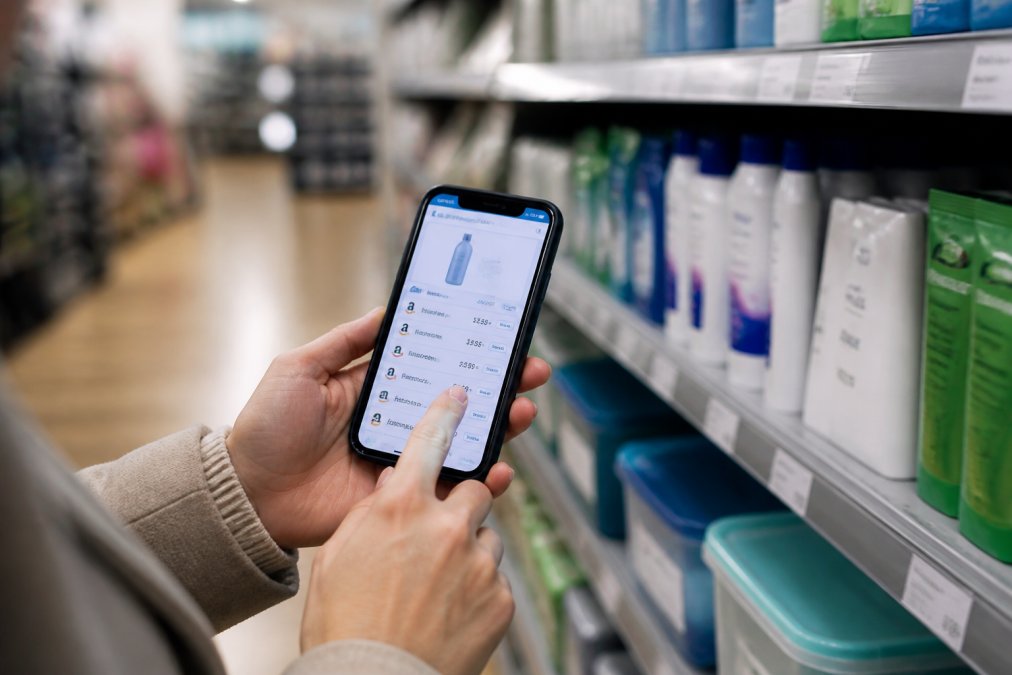
| Step | Action | Time Required |
|---|---|---|
| 1 | Check price history | 2 minutes |
| 2 | Calculate total delivered cost | 3 minutes |
| 3 | Verify price matching eligibility | 2 minutes |
| 4 | Apply coupons and loyalty benefits | 2 minutes |
| 5 | Compare subscription pricing for repeat buys | 1 minute |
Retail price comparison hides real complexity in dynamic pricing, hidden fees, and return costs. Smart Shoppers llc is built for shoppers who want to skip the complexity: a single platform covering home essentials, electronics, personal care, pet supplies, and seasonal fashion, with competitive pricing across categories and easy navigation through curated collections. Rather than comparing prices across a dozen sites, you get a wide catalog in one place. Visit Smart Shoppers llc to browse current offerings and find the price that actually works for your household.
Frequently Asked Questions
Is it generally better to buy household essentials online or in-store?
It depends on the item and how you shop. Non-perishable household essentials like cleaning supplies, personal care products, and paper goods are often cheaper online when bought in bulk, especially after applying coupon codes or loyalty rewards. In-store shopping can beat online prices on groceries and perishables, where you avoid delivery fees and can check for in-store-only promotions. The real answer is to compare total cost, including shipping and any return risk, before committing either way.
What is the biggest hidden cost associated with online shopping?
Shipping fees are the most common hidden cost, but return logistics can be just as significant. Many retailers charge restocking fees or require you to cover return shipping, which can easily erase any savings on a lower sticker price. Browsing history also plays a role: dynamic pricing algorithms can raise prices on items you've viewed repeatedly, meaning the price you see after multiple visits may be higher than what a first-time visitor sees for the same product.
Are there specific product categories that are consistently cheaper online?
Electronics, books, personal care products, and seasonal apparel tend to be cheaper online because e-commerce retailers carry lower overhead costs than brick-and-mortar stores and face intense price competition from multiple sellers on digital marketplaces. Groceries and bulk staples, however, are less predictable online once you factor in delivery or service fees. Using a price comparison tool before purchasing any category helps confirm whether the online price actually beats the in-store shelf price after all fees.
What are the primary disadvantages of buying online versus in-store?
The main drawbacks include shipping costs, delivery wait times, the inability to inspect items physically before purchase, and the hassle of returns if something is wrong. Online shopping also exposes you to dynamic pricing, where algorithms adjust prices based on demand, time of day, or your browsing history. Sizing and fit issues are common with clothing, and restocking fees on returns can make an initially cheaper online price end up costing more than the in-store equivalent.
This article was written using GrandRanker